Twilight Nature Walk 2026
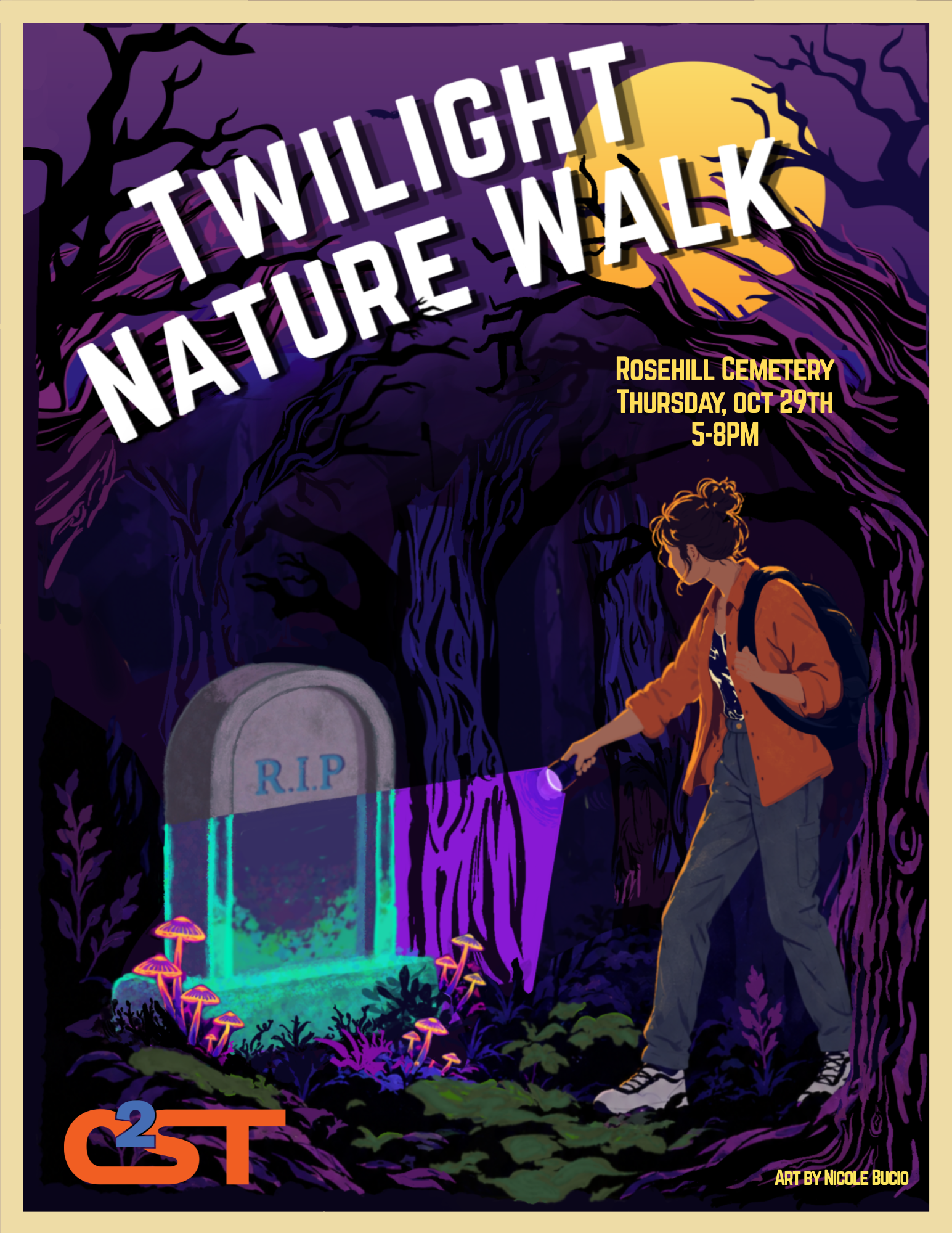
October 29, 2026
5:00 pm
– 8:00 pm
5800 N Ravenswood Ave, Rosehill Cemetery - East Entrance
5800 North Ravenswood Avenue, Chicago, IL, USA
Program Series:
Climate, Energy, and EnvironmentLife ScienceScience and Society
Third Annual Twilight Nature Walk at Rosehill Cemetery
Join the Chicago Council on Science and Technology on Thursday, October 29th, from 5:00 PM to 8:00 PM for the third annual Twilight Nature Walk at Rosehill Cemetery, an evening of nature exploration under the autumn twilight. Read more…
Silver Screen Science: Project Hail Mary
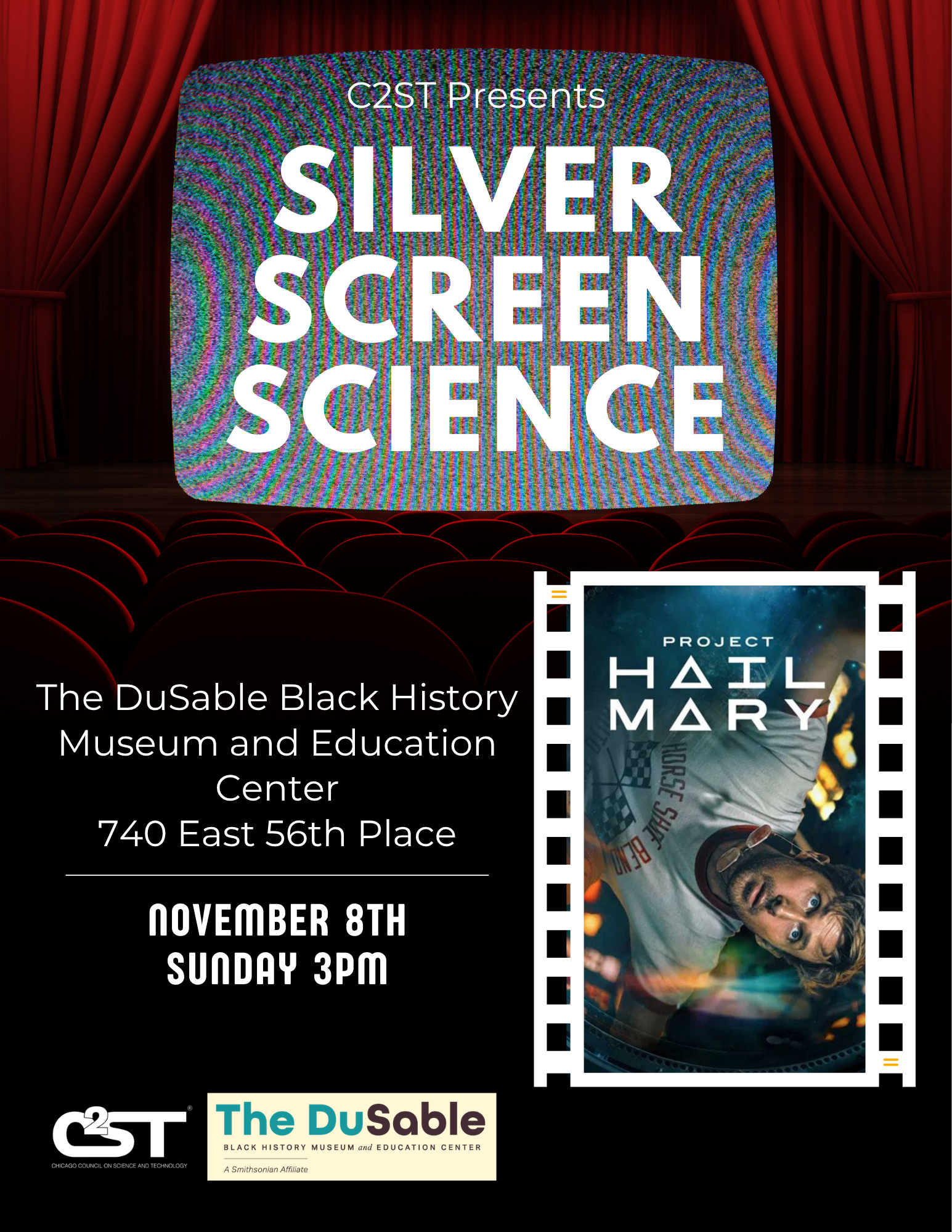
November 8, 2026
3:00 pm
The DuSable Black History Museum and Education Center
DuSable Black History Museum and Education Center, East 56th Place, Chicago, IL, USA
Program Series:
Physical ScienceScience and SocietyTechnology and Engineering
Join the Chicago Council on Science and Technology (C2ST) and the DuSable Black History Museum and Education Center for a special screening of Project Hail Mary, followed by an engaging conversation about the science behind the film. Read more…
STEM to the Future: A Comedic Review of American Innovation Since the 80’s
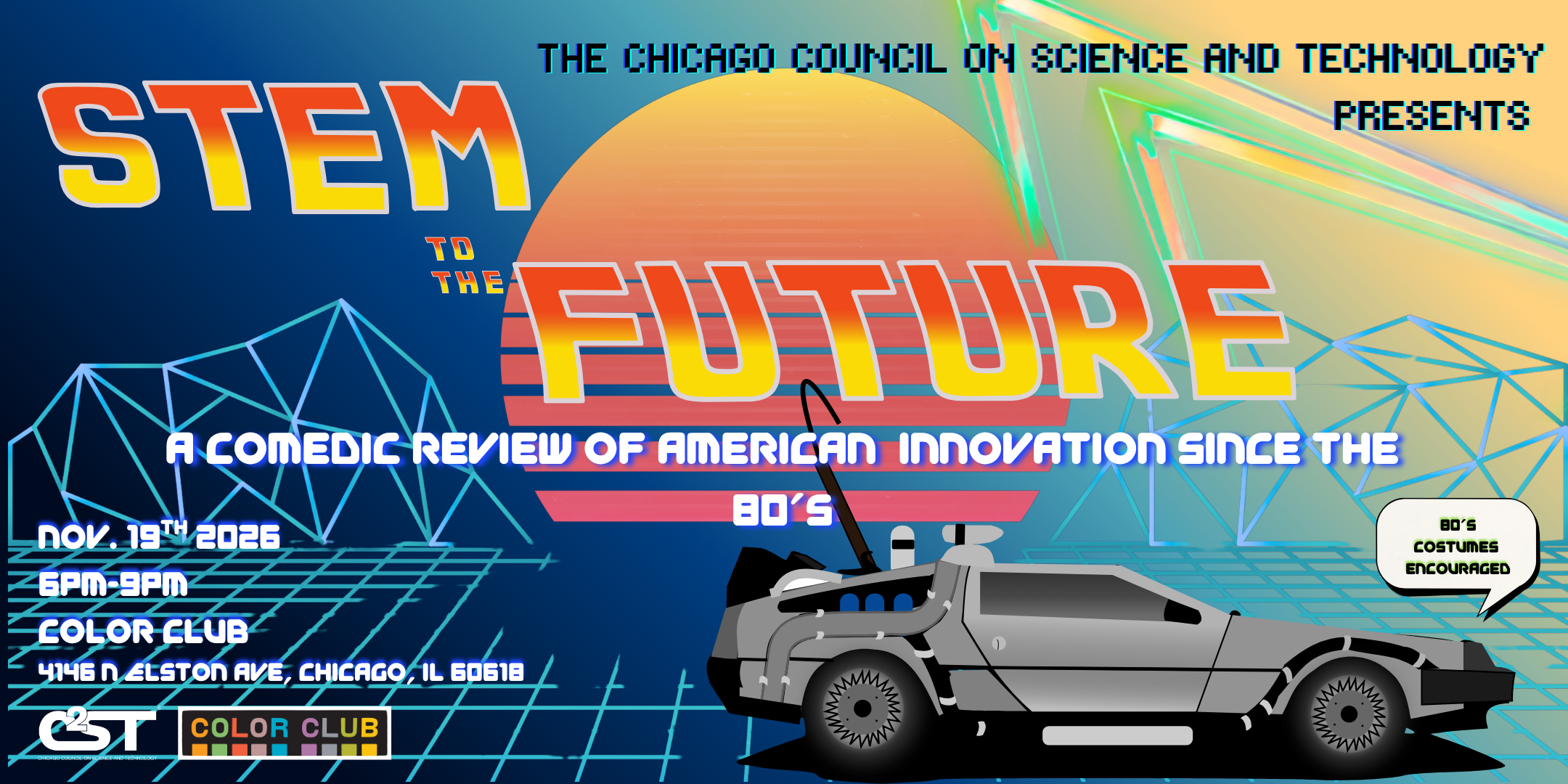
November 19, 2026
6:00 pm
– 9:00 pm
Color Club
4146 N Elston Ave, Chicago, IL 60618, USA
C2ST’s annual Fall Social is back! Come revel in awe of the scientific breakthroughs that came from this prolific era of innovation.
This year’s Fall Social was created to be a celebration of human ingenuity and scientific work and discovery. Our annual fundraiser and networking event brings together STEM professionals, educators, entrepreneurs, community leaders, supporters and friends for an evening of connection, laughter and philanthropy.
Through a playful retrospective on technological & scientific innovation since the 80’s, C2ST and Co. will explore how big ideas, like the first artificial heart, or even the piano tie, shaped a new reality.
Think Before You Speak: How “Mind-Reading” Technology is Giving People Their Voices Back
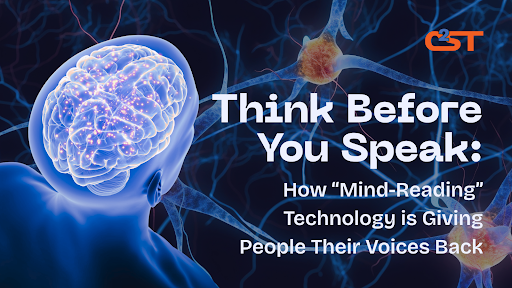
Think about the last time you spoke to someone. Did you consciously think about the action of speaking? For most people, this movement is subconscious, but that’s not the case for Casey Harrell. Read more…
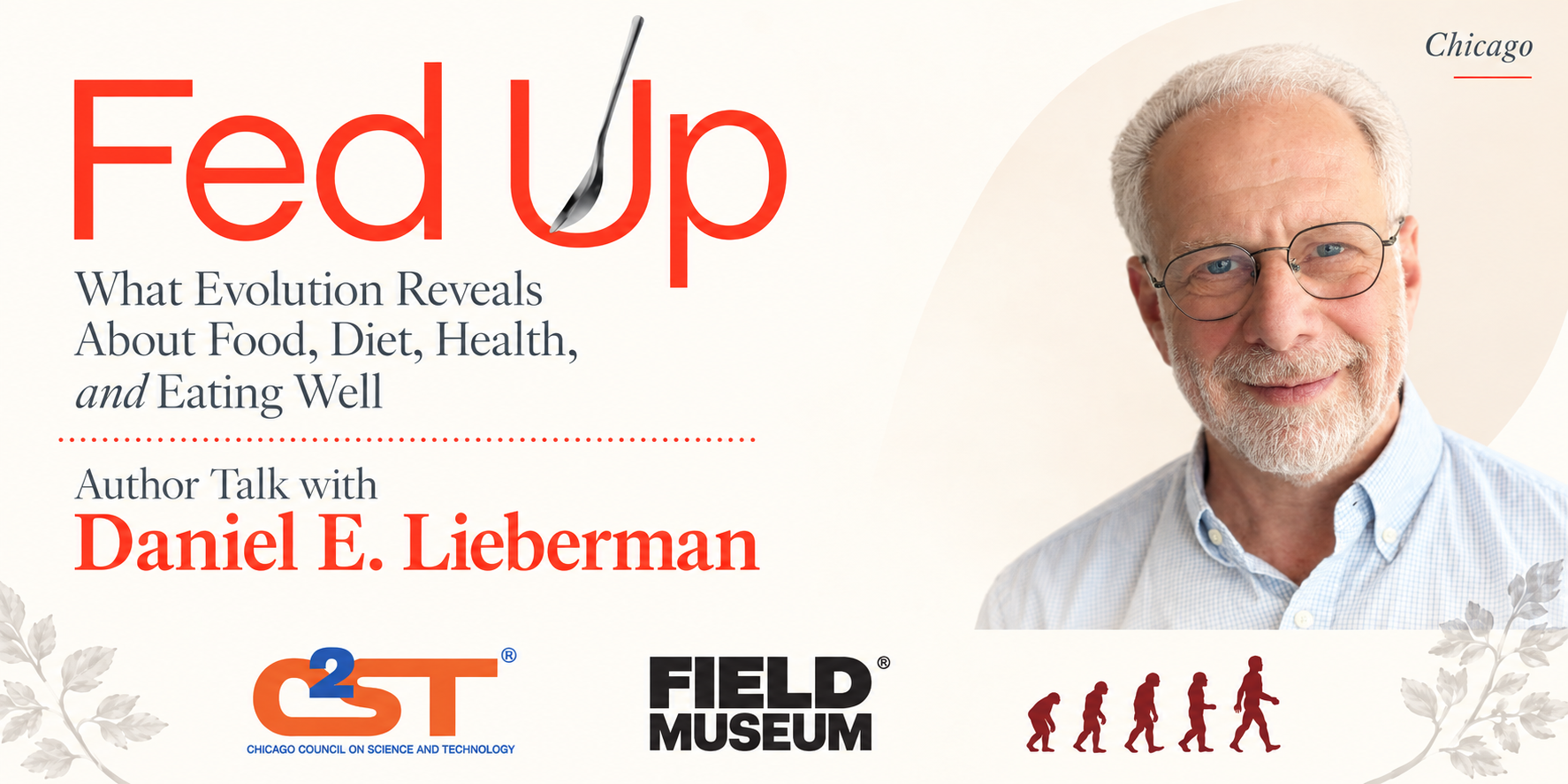
Fed Up: What Evolution Reveals about Food, Diet, Health, and Eating Well
November 14, 2026
2:00 pm
– 3:00 pm
Field Museum of Natural History
Field Museum, South Lake Shore Drive, Chicago, IL, USA
Program Series:
Health and WellnessScience and Society
How many times a day do you ask the question, “What should I eat?” Are you confused and overwhelmed by the thousands of factory-made foods supermarkets sell? Or the abundance of diets (paleo, Mediterranean, low-fat, low-carb, low-calorie, intermittent fasting, vegan, vegetarian, carnivore) claimed to optimize your health and manage your weight?
In this talk and his new book, Fed Up, best-selling author and Harvard professor Daniel Lieberman tackles this confusion. Drawing on evolutionary biology, anthropology, physiology, and medical science, he explores how our ancestors never evolved to choose their food to lose weight or live to 100. Instead, we evolved to eat almost anything in order to survive. Read more…
C2ST Supporters

Alan Schriesheim & Kay Torshen
John A. Cable Foundation
Arch Investors Ltd






Alan Schriesheim & Kay Torshen
John A. Cable Foundation
Arch Investors Ltd